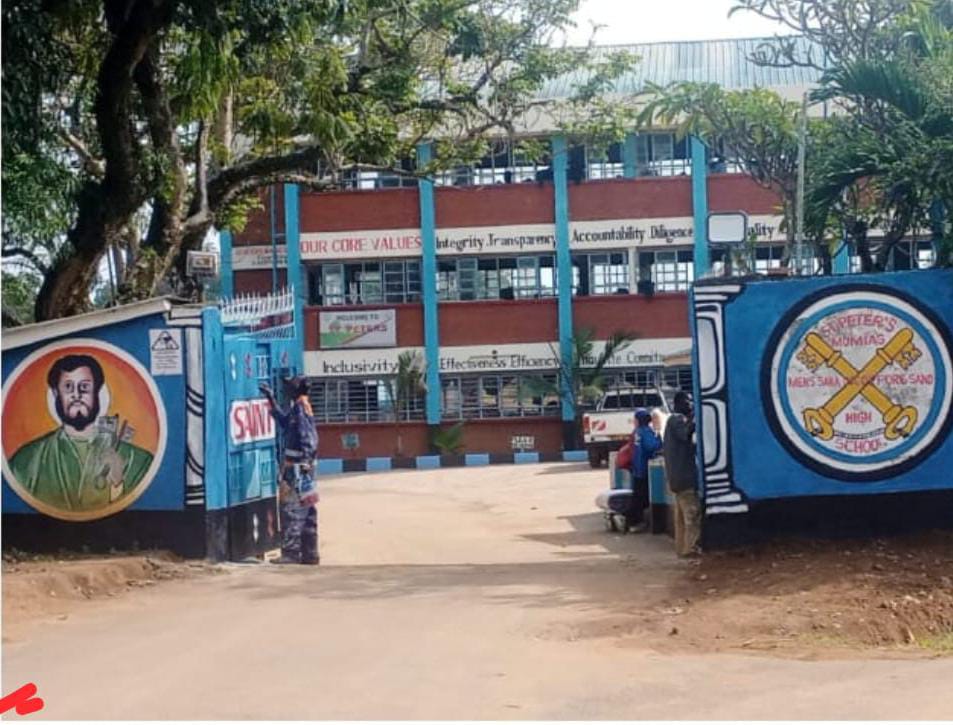
As Kenya ushers in the senior school phase under the Competency-Based Education (CBE) system, St Peters Mumias Boys National School is emerging as a frontrunner in the transition, blending tradition, innovation, and decisive leadership.
With more than 1,000 Grade 10 learners admitted this year alone, the Mumias-based national school has demonstrated both capacity and confidence in handling the pioneer cohort under the new curriculum framework.
At the centre of this transition is Chief Principal Mr Chrispinus Owino, whose proactive leadership has seen the institution introduce internal reforms aimed at ensuring the seamless implementation of the new system.
Confident and Curious Pioneer Class
Unlike previous cohorts shaped by the 8-4-4 system, the Grade 10 learners at the institution are showing remarkable confidence and intellectual curiosity.
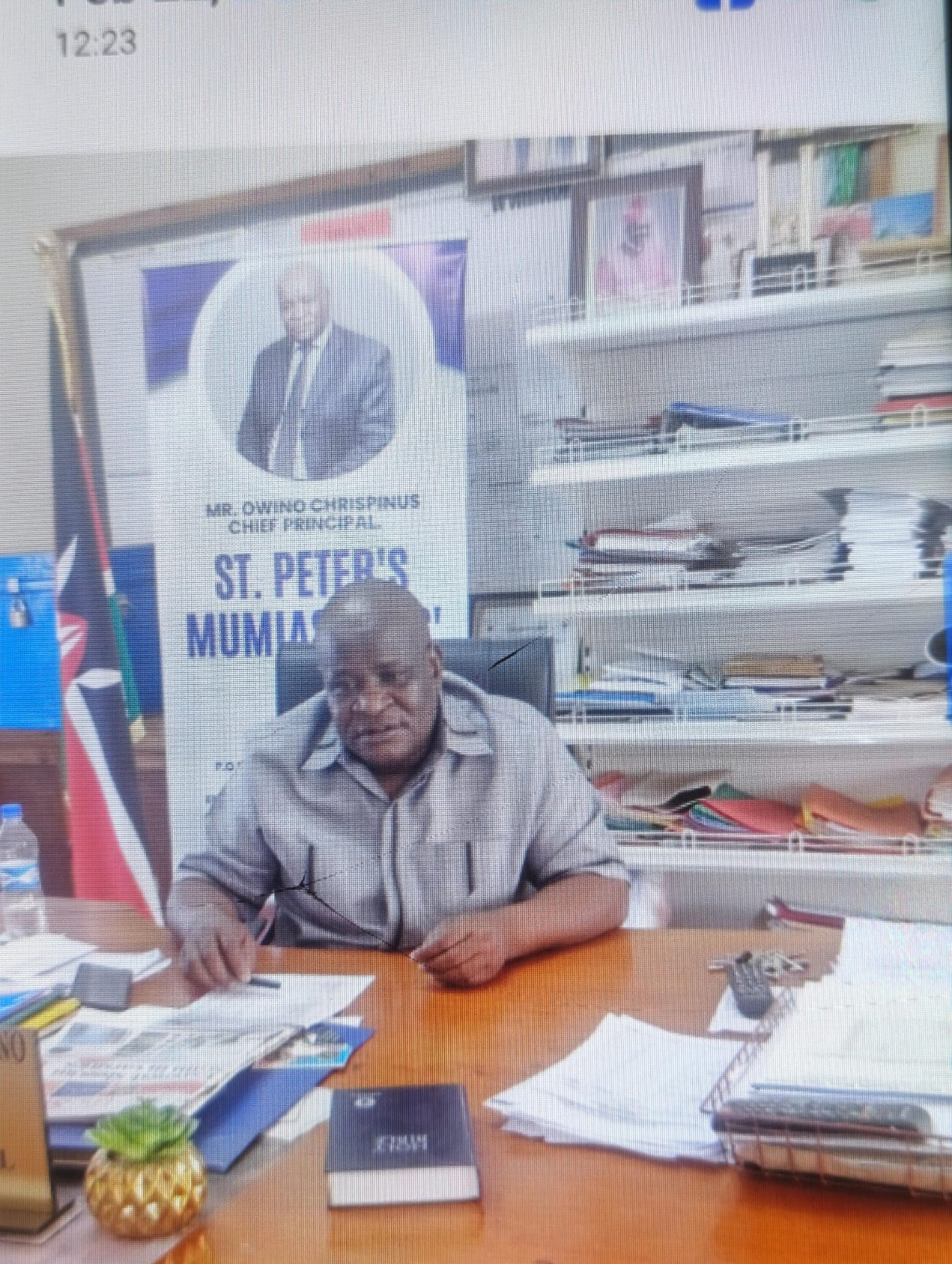
“They are mature, sharp, and highly inquisitive,” says Mr Owino.
“They freely ask questions, even to the principal. That is exactly what CBE envisions: learners who are bold and engaged.”
Education observers note that such learner confidence aligns closely with the goals of competency-based learning, which emphasises critical thinking, collaboration, and practical skills rather than rote memorisation.
STEM Pathway Dominates
True to its reputation as an academic powerhouse, the school has positioned itself firmly as a STEM-focused institution. The overwhelming majority of Grade 10 learners have selected the Science, Technology, Engineering, and Mathematics pathway.
Only a small percentage opted for the Social Sciences, Arts, and Sports pathways, reflecting both student preference and the school’s long-standing academic strengths.
Administrators report that no learning area has experienced significant operational challenges since the rollout, a rare achievement during the early stages of nationwide implementation.
Retooling Teachers Ahead of the Curve
Although learning materials have been supplied by the Kenya Institute of Curriculum Development (KICD), senior school teacher retooling at the national level is yet to take place.
Rather than wait, the institution initiated its own internal teacher capacity-building programmes.
“We could not afford to wait,” Mr Owino explains.
“We chose to retool our teachers internally to guarantee quality delivery from day one.”
The school’s diverse and highly motivated teaching staff has played a crucial role in stabilising the transition and ensuring that learning continues smoothly.
Funding Strain and Infrastructure Gap
Despite being elevated from C2 to C1 status, the school has yet to receive significant infrastructural development support to match its expanded mandate.
During past transitions, institutions such as Kakamega School and Butere Girls High School benefited from major structural upgrades. St Peters Mumias Boys now faces the dual challenge of increased enrolment and limited expansion support.
Compounding the situation is stagnant capitation funding. The current fee structure was formulated in 2014, long before the sharp rise in the cost of basic commodities.
“In 2014, a bag of beans cost KSh 7,000. Today it costs nearly KSh 15,000. Feeding learners has become a serious challenge,” the principal notes.
Education stakeholders are now calling on relevant authorities to urgently review capitation rates to reflect current economic realities.
A School Defining the Future
Even amid financial and infrastructural constraints, St Peters Mumias Boys National School stands out as a symbol of preparedness and institutional resilience.
With visionary leadership, empowered teachers, and a bold pioneer class, the institution appears determined not only to adapt to Competency-Based Education but also to help shape its success.
As the senior school phase unfolds across the country, attention may well turn to Mumias to see how one of Kenya’s academic giants writes its next chapter.